Global Perspective
Key Quotes
Gender equality and women’s empowerment are enshrined as Sustainable Development Goal 5 and in the Convention on the Elimination of All Forms of Discrimination Against Women.
World Bank Group
Gender Strategy 2024 – 2030
UN Secretary-General, Mr. António Guterres, has stated that achieving gender equality and empowering women and girls is the unfinished business of our time, and the greatest human rights challenge in our world.
UN Women
United Nations
To achieve smart, sustainable and inclusive growth the European Union needs to start mainstreaming gender equality now.
EIGE
European Institute for Gender Equality
Workforce Intelligence
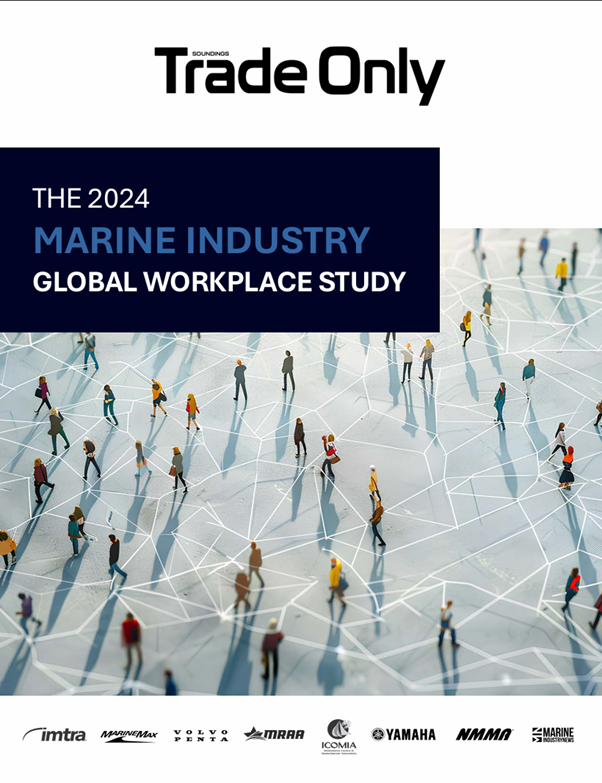
2024 Marine Industry Global Workplace Study
The 2024 Marine Industry Global Workplace Study, which counted on over 700 respondents and two focus groups, reveals critical insights into gender disparities across the international sector:
18% Salary Disparity
Women’s Marine & Boating Industry salaries are 18% lower than those of their male counterparts. This disparity is more pronounced at the highest leadership levels.
Job Satisfaction Gap
Whilst the job satisfaction rate in the marine industry significantly exceeds global workforce levels […], women report lower satisfaction levels compared to men.
Role & Departmental Segregation
Men are predominantly represented in sales, customer service, and product/project management roles… Women are primarily found in marketing/communications, administrative, and customer service roles.
Industry Benchmarking
ICOMIA Diversity Committee – 2024 Gender Mapping Survey
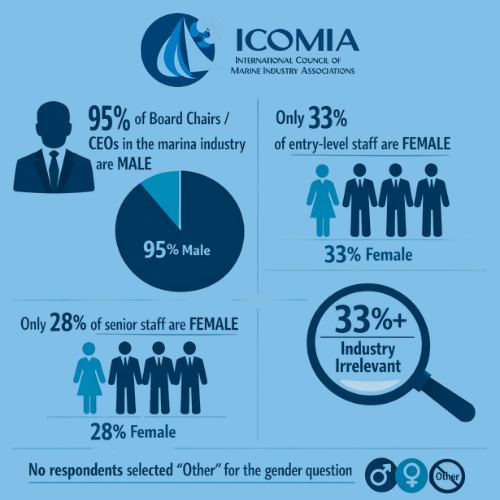
Key benchmark figures illustrating current gender representation and industry perspectives across marinas and maritime businesses worldwide:
Board Chairs / CEOs in the marina industry are male
Of entry-level staff are female across respondent organisations
Of senior staff positions held by female professionals
Consider gender equality to be of little industry relevance
Respondents selected ‘Other’ for the gender survey question
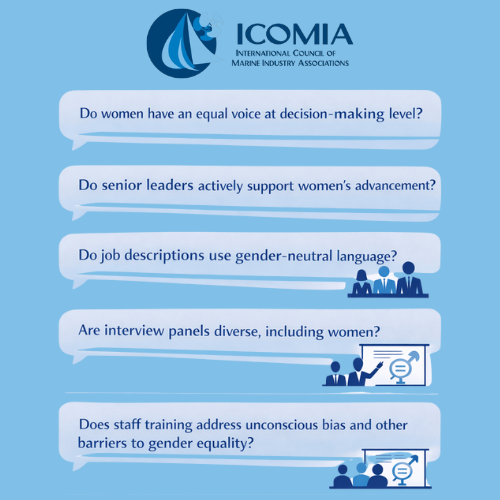
Action Frameworks
Gender Equality Strategies – WINBLUE
The EMFAF-funded WINBLUE project, whose team kindly ran a free workshop for boating industry members on creating a Gender Equality Plan, makes a strong case for adopting gender equality strategies in the blue economy.
In describing the project’s rationale, they quote the European Institute for Gender Equality’s calculations that “by 2050, improving gender equality would lead to an increase in the EU’s GDP per capita by 6.1% to 9.6%, which amounts to €1.95 to €3.15 trillion”.
They detail advantages in terms of employment and higher productivity, asserting that across the board, “the EU can only reach its full potential if it uses all of its talent and diversity.”
Naturally, however, this calls on overcoming existing barriers. Showcasing a wide variety of gender equality good practices, they conclude by identifying strategies that “can deliver tangible results or, at least, inspire change and openness towards Gender Equality”:
Effective Gender Equality Policies and Work-Life Policies
Here, WINBLUE clarifies that to be successful, these policies need to include “a high degree of details, with measurable objectives, a precise roadmap and a list of actions, and include quantifiable KPIs and Milestones”.
Addressing a need for more flexibility in terms of a work-life balance, etc., can lead to creating a “working environment where the workload can be more bearable, and workers can deal better with work and family duties. Workers can be more satisfied, motivated, more loyal to the company”, leading to “a positive impact on productivity and the company’s image.”
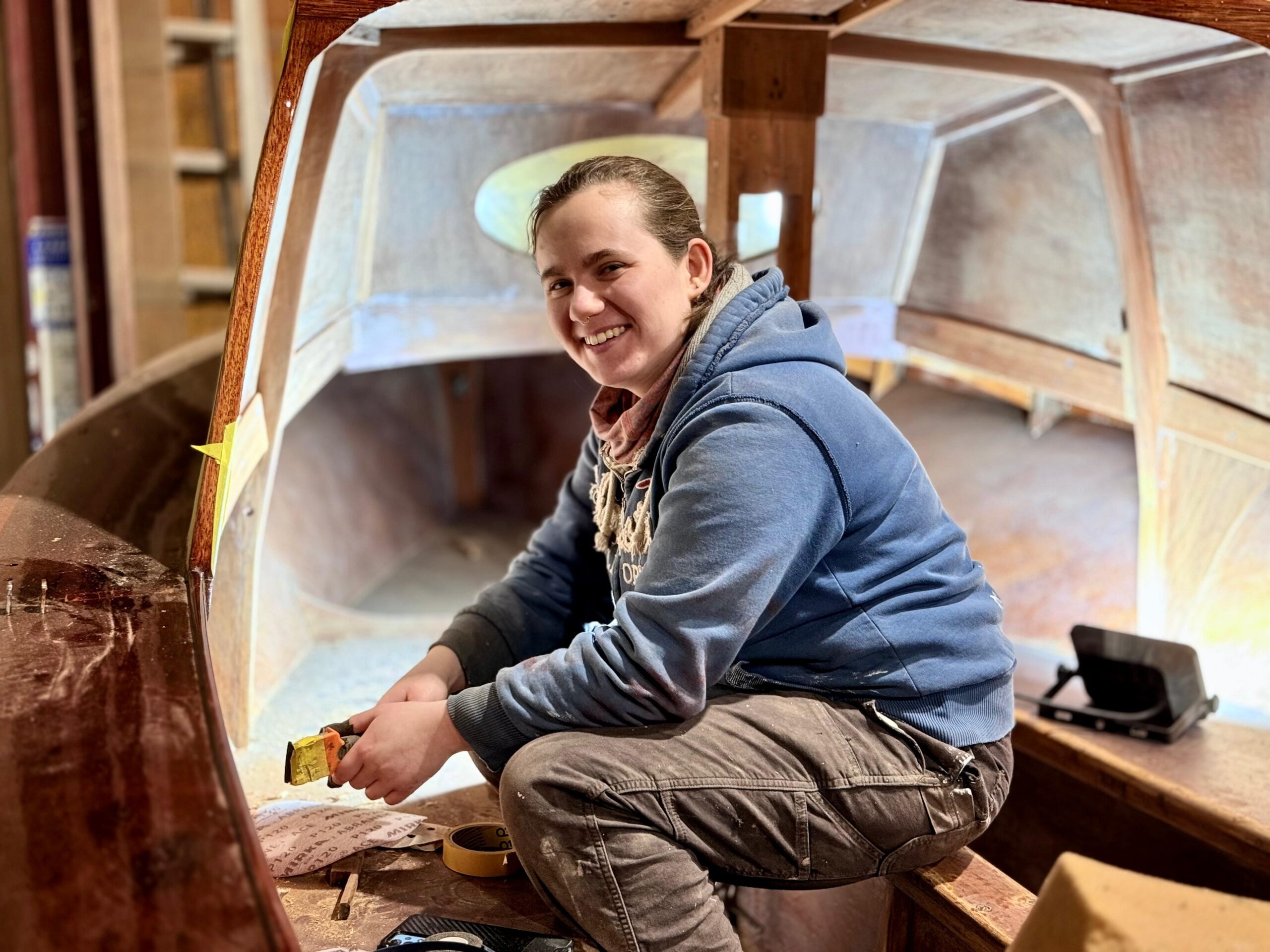
Culture & Advancement
Awareness Campaigns and Training
These practices can help foster a cultural shift towards inclusivity and community within companies.
By raising awareness of unconscious biases and promoting dialogue, such initiatives can reduce instances of discrimination, break down gender stereotypes, and encourage diverse perspectives, driving creativity and innovation.
Information Events to Highlight Career Opportunities
This section focuses on recruitment and dismantling societal biases and obstacles that prevent women from accessing a wide range of jobs in the blue economy.
Efforts can include presenting diverse career paths and sharing female success stories, with the aim of inspiring more women to pursue opportunities in traditionally male-dominated fields, ultimately creating a more balanced workforce.
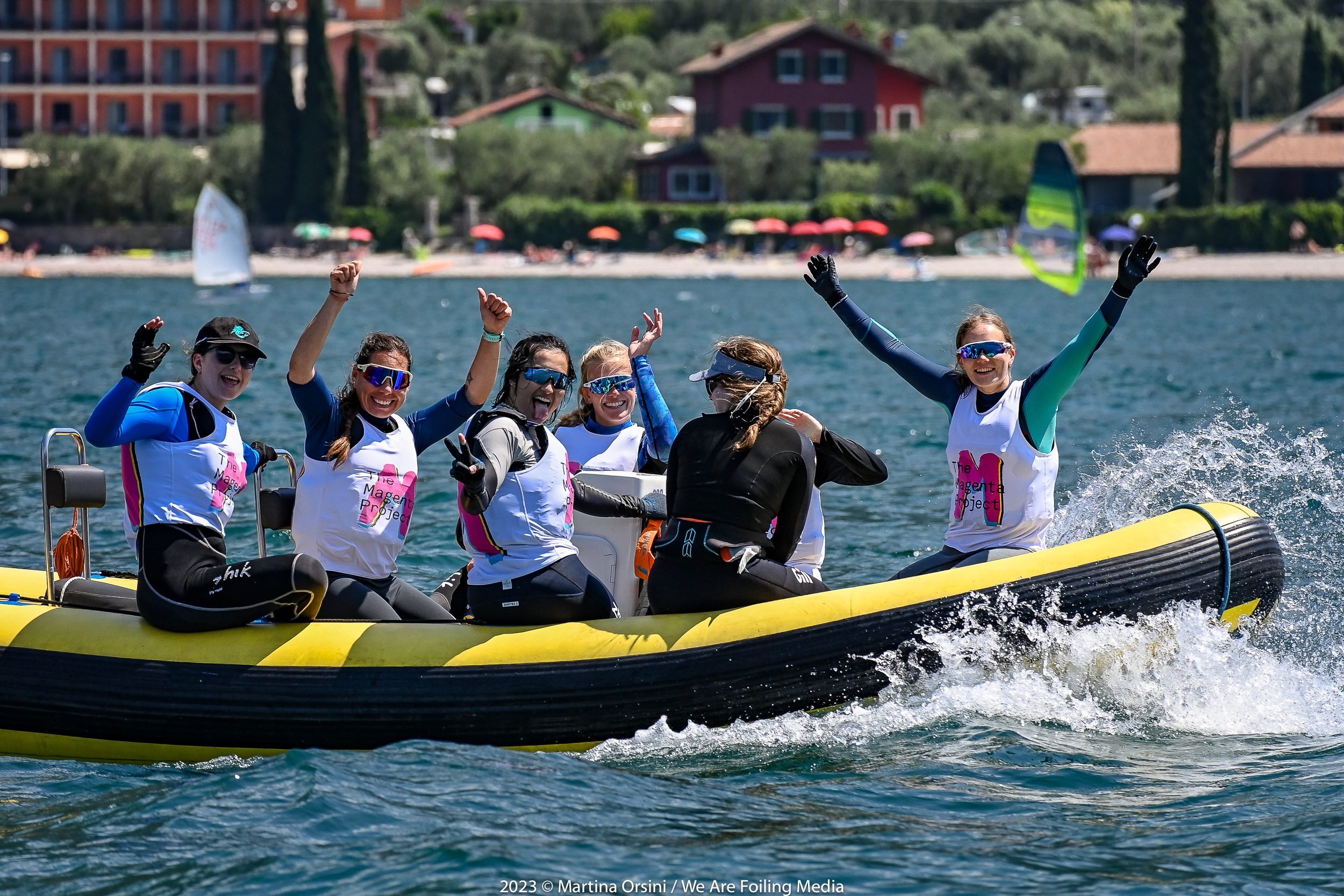
For more information and resources, visit: winblue-project.eu
Special thanks to Rebecca Zammit from AcrossLimits for her help and collaboration.
Resource Repository
Useful Links to Further Reading
Guides to Inclusive Language
- European Institute Gender Equality: Words Matter Supporting Gender Equality through Language and Communication ↗ PDF Document (EIGE)
- The Council of Europe’s Guidelines for the use of language as a driver of inclusivity ↗ Council of Europe
- The UN’s ‘Gender-inclusive language’ ↗ United Nations
- Oxfam’s Inclusive Language Guide ↗ Oxfam Policy & Practice
Reports & Articles
- McKinsey: Diversity Wins – How Inclusion Matters ↗ mckinsey.com
- EIGE: Economic Benefits of Gender Equality ↗ eige.europa.eu
- European Commission: People First – Diversity & Inclusion ↗ commission.europa.eu
- ILO: International Labour Organization Newsroom ↗ ilo.org
Guides, Portals & Frameworks
- Equality and Human Rights Commission (EHRC) ↗ equalityhumanrights.com
- European Institute for Gender Equality (EIGE) ↗ eige.europa.eu
- Horizon Europe on Gender Equality Plans ↗ European Commission Publications
- Instituto de las Mujeres (Spain) ↗ inmujeres.gob.es
- Swiss Federal Office for Gender Equality (FOGE / EBG) ↗ View Gender Equality Strategy 2030 →
Take Action
Advancing Gender Equality Across the Global Marine Sector
Explore the complete directory of ICOMIA resources, industry research reports, and technical publications to support your organisation.